





M-Sand Price in Chennai 2026 — Complete Buyer’s Guide
Table of Contents
M-Sand price in Chennai in 2026 generally falls between ₹1,050 and ₹1,650 per tonne, or roughly ₹4,000 to ₹6,500 per “unit” (100 cft) — a wide range that comes down almost entirely to how your supplier defines a “unit” and which grade you’re buying (BuildingNeeds.in, 2026; Aruna M Sand, 2026; MRS Bluemetals, 2026). For a full 1,000 sq ft house, most homeowners should budget ₹70,000–₹95,000 for their total sand requirement, plus transport (HireandBuild, 2026).
This guide explains exactly why M-Sand prices look so inconsistent online, what grade you actually need for each part of your build, and how much sand a typical house really requires.
Key Takeaways
- M-Sand is priced two ways in Chennai — per tonne (a fixed weight) or per “unit” (100 cft, a volume that varies 4–5 tonnes depending on moisture and packing) — always confirm which one you’re being quoted (MRS Bluemetals, 2026).
- VSI M-Sand is best for RCC/concrete work; P-Sand (a finer, washed grade) is preferred for plastering; Water Wash M-Sand sits in between (BuildingNeeds.in, 2026).
- A 1,000 sq ft house typically needs roughly 40–50 tonnes of M-Sand in total across foundation, concrete, and plastering work (Aruna M Sand, 2026).
- Total sand budget for a 1,000 sq ft house is typically ₹70,000–₹95,000 plus transport (HireandBuild, 2026).
- Always ask for a PWD-certified, weigh-bridge-verified delivery — “unit” quotes without a stated tonnage are a common source of short-supply (Buildiyo, 2026; MRS Bluemetals, 2026).
Why M-Sand Prices Look So Different Online
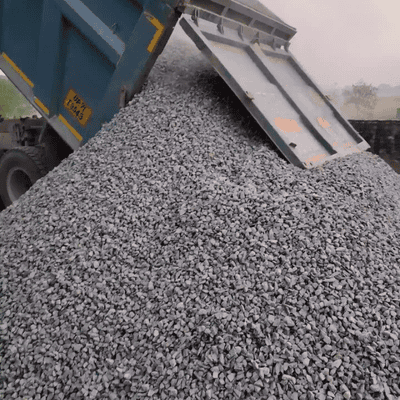
If you’ve searched for M-Sand price in Chennai and found numbers ranging from ₹1,050 a tonne to ₹6,500 a “unit,” you’re not imagining the confusion — it’s a real, widely-flagged industry problem. A tonne is a fixed, weigh-bridge-verified 1,000 kg. A unit, on the other hand, is 100 cubic feet — a volume measurement that can weigh anywhere from 4 to 5+ tonnes depending on how wet or tightly-packed the sand is (MRS Bluemetals, 2026).
That’s why the same material can be quoted as “₹1,300 per ton” by one supplier and “₹6,500 per unit” by another — they may actually be close to the same price once converted to the same measurement, or one may be charging a real premium. Always ask your supplier to state both the price and the tonnage per unit in writing before ordering (Buildiyo, 2026).
M-Sand Grades — Which One Do You Actually Need?
| Grade | Best For | Typical Price Range |
|---|---|---|
| VSI M-Sand | RCC/concrete work (foundation, columns, slab) | ₹1,050–₹1,300/tonne |
| Water Wash M-Sand | General masonry, brickwork | Mid-range between VSI and P-Sand |
| P-Sand (Plastering Sand) | Wall plastering, finishing work | ₹1,150–₹1,650/tonne (slightly higher than VSI) |
(BuildingNeeds.in, 2026; MRS Bluemetals, 2026)
VSI (Vertical Shaft Impactor) M-Sand has the most uniform, cubical particle shape, which is what makes it structurally reliable for concrete. P-Sand is a finer, washed variant developed specifically to match the smooth finish contractors used to get from river sand — which is why most quality-focused plastering work in Chennai now specifies P-Sand instead of standard M-Sand (Buildiyo, 2026).
How Much M-Sand Does a 1,000 Sq Ft House Need?
| Stage | Approximate M-Sand Requirement |
|---|---|
| Foundation | ~5–6 tonnes |
| Full single-floor house (all stages combined) | ~40–50 tonnes (roughly 8–10 units) |
| Plastering (per 100 sq ft) | ~0.2 tonnes of P-Sand |
(Aruna M Sand, 2026)
A commonly used field estimate for Chennai residential projects is 0.65–0.85 tonnes of M-Sand per sq ft of built-up area, covering foundation backfill, structural concrete, and plastering combined (Buildiyo, 2026). For a 1,000 sq ft house, that lines up closely with the 40–50 tonne total above.
Estimated M-Sand Budget for a 1,000 Sq Ft House
Based on current 2026 Chennai rates, total sand cost (M-Sand + P-Sand combined) for a full 1,000 sq ft house typically comes to:
₹70,000 – ₹95,000, plus transport (HireandBuild, 2026)
Transport is usually charged separately per lorry load and depends on distance from the supplier’s yard — always confirm the delivered price to your specific site rather than the ex-factory rate alone.
4 Quality Checks Before You Buy
- Ask for the PWD certification. Only PWD-certified M-Sand manufacturers meet Tamil Nadu government quality standards — ask to see the certificate, not just hear about it (Aruna M Sand, 2026).
- Confirm IS 383 compliance. This is the Indian Standard grading specification for manufactured sand used in concrete.
- Insist on a weigh-bridge slip. A weigh-bridge reading is the only verifiable way to confirm you received the tonnage you paid for — don’t rely on truck-load counting alone (MRS Bluemetals, 2026).
- Check for silt content. Quality M-Sand should have near-zero silt content and a consistent, cubical particle shape — a simple field test is to rub a handful between your fingers; excessive fine dust residue signals higher silt content.
Common Buying Mistakes That Cost You Money
- Ordering by “unit” without confirming tonnage — this is the single most common way buyers get short-supplied (Buildiyo, 2026)
- Buying in monsoon season without planning ahead — sand prices can spike 8–12% between June and August due to quarry access issues; locking in rates in April–May before the season starts is the safer bet (HireandBuild, 2026)
- Using red sand for structural work — it’s cheaper but only suitable for filling, not concrete or mortar; using it structurally can lead to costly repairs later (HireandBuild, 2026)
- Not checking delivered quantity on-site — have someone confirm the cft/tonnage delivered matches the order before signing off (HireandBuild, 2026)
Frequently Asked Question
What is the price of M-Sand in Chennai in 2026?
M-Sand in Chennai in 2026 typically costs ₹1,050–₹1,650 per tonne depending on grade (VSI, Water Wash, or P-Sand), or roughly ₹4,000–₹6,500 per “unit” (100 cft) — always confirm which pricing basis your supplier is using (BuildingNeeds.in, 2026; MRS Bluemetals, 2026).
How much M-Sand do I need for a 1,000 sq ft house?
A full 1,000 sq ft house typically requires 40–50 tonnes of M-Sand across the foundation, structural concrete, and plastering stages combined (Aruna M Sand, 2026).
What is the difference between M-Sand and P-Sand?
M-Sand is generally more consistent in quality, more environmentally sustainable, and more readily available than river sand, whose extraction is restricted in Tamil Nadu. Modern VSI M-Sand production has closed most of the quality gap that once existed between the two (Buildiyo, 2026).
Why do M-Sand prices vary so much between suppliers?
The biggest reason is unit ambiguity — some suppliers quote per tonne (a fixed weight) while others quote per “unit” (100 cft, a volume that can weigh anywhere from 4 to 5+ tonnes). Always ask for the price per tonne and the exact tonnage per unit in writing before comparing quotes (MRS Bluemetals, 2026).
Get a Clear, Weigh-Verified M-Sand Quote
CivilBazaar supplies VSI M-Sand, Water Wash M-Sand, and P-Sand across Chennai — including OMR, ECR, Tambaram, Anna Nagar, Velachery, and Ambattur — with transparent per-tonne pricing and no unit-conversion guesswork.
📞 Call / WhatsApp: +91 91599 91590 📋 Get a Free Quote: civilbazaarchennai.com/contact


