






AAC Blocks vs Red Bricks vs Fly Ash Bricks: Which Should You Choose?
Table of Contents
Choosing a walling material feels like a small decision until you’re staring at three price quotes and a mason who insists bricks are “the only real option.” It isn’t a small decision — walling accounts for a meaningful share of your structural and finishing budget, and the material you pick affects everything from your cooling bills to how fast your walls go up.
This guide compares AAC blocks, fly ash bricks, and traditional red clay bricks on what actually matters for a Chennai build: strength, weight, thermal performance in a hot-humid climate, water resistance, environmental impact, and real-world cost. Every specification below traces back to the governing Indian Standard — IS 1077 for burnt clay bricks, IS 12894 for fly ash bricks, and IS 2185 (Part 4) for AAC blocks — not manufacturer marketing copy.
Key Takeaways
- Fly ash bricks post the highest per-unit compressive strength of the three — 7.5–10 N/mm² for Class I under IS 12894:2002 — ahead of both red bricks and AAC blocks.
- AAC blocks run 550–650 kg/m³ against 1,600–1,920 kg/m³ for red clay bricks — roughly a third the weight — which is why they now dominate RCC-framed construction despite a lower per-unit strength rating.
- Red bricks stay the cheapest, most familiar option for small load-bearing jobs, but carry the heaviest environmental cost of the three, with industry estimates putting topsoil use at around 18 tonnes per lakh bricks fired.
- India’s AAC blocks market is expanding fast — from roughly $3.6 billion in 2024 toward a projected $6.2 billion by 2030 (Research and Markets, 2026) — pushed largely by green-building codes and government fly-ash policy.
What’s the Real Difference Between These Three Materials?
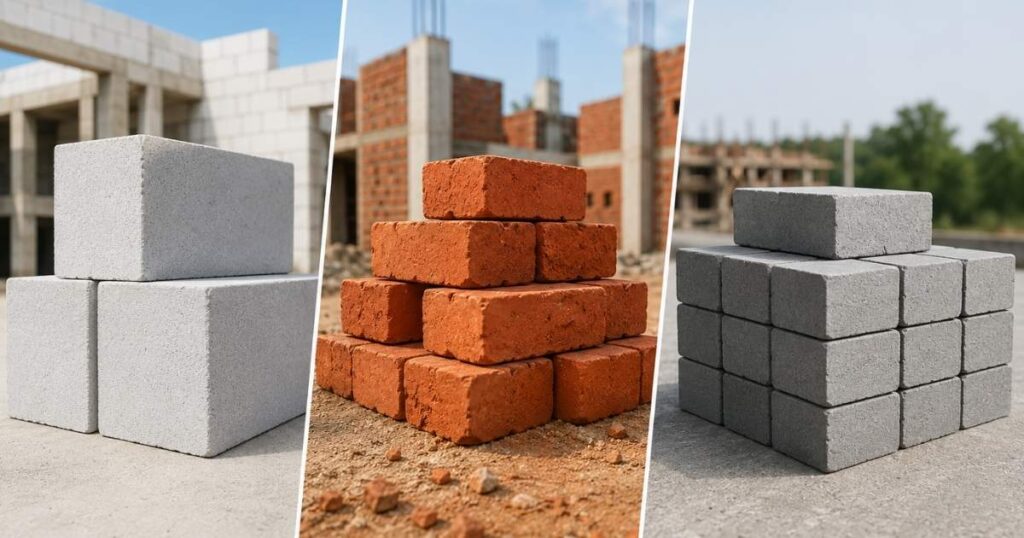
Each one is made differently, and that manufacturing process drives every downstream difference in strength, weight, and durability.
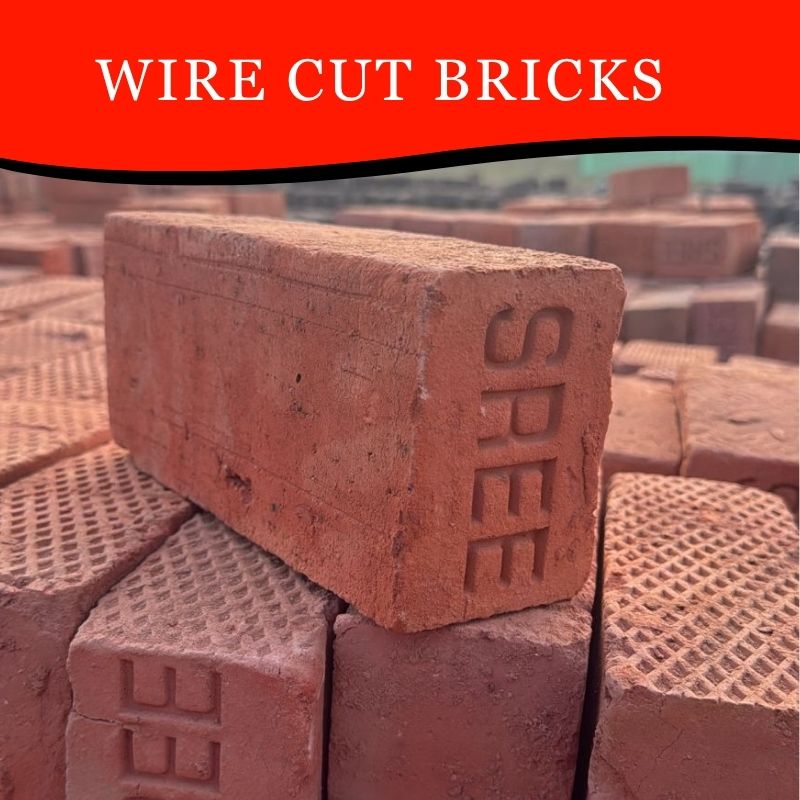
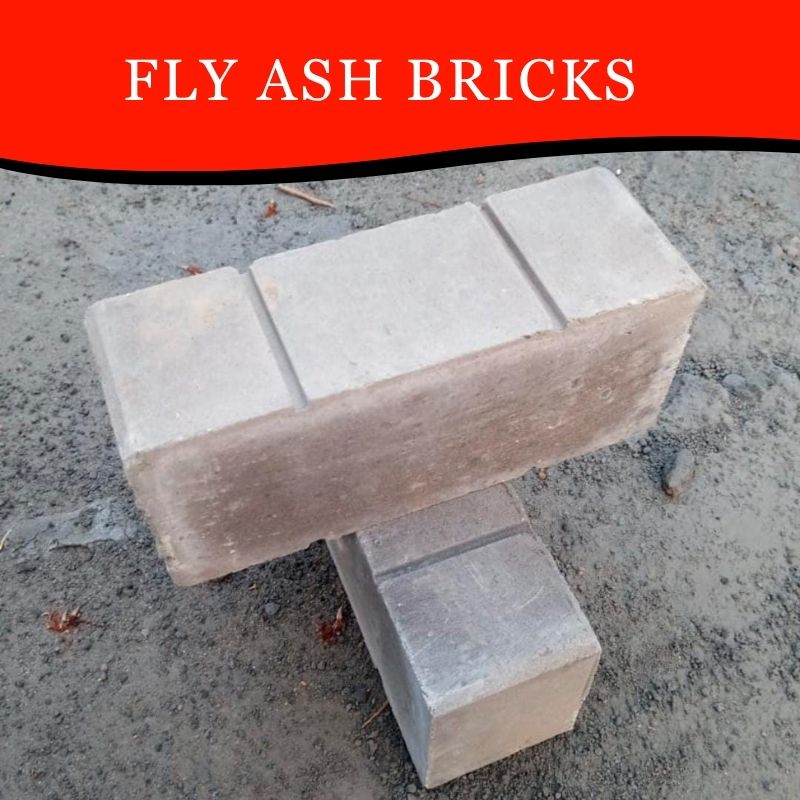
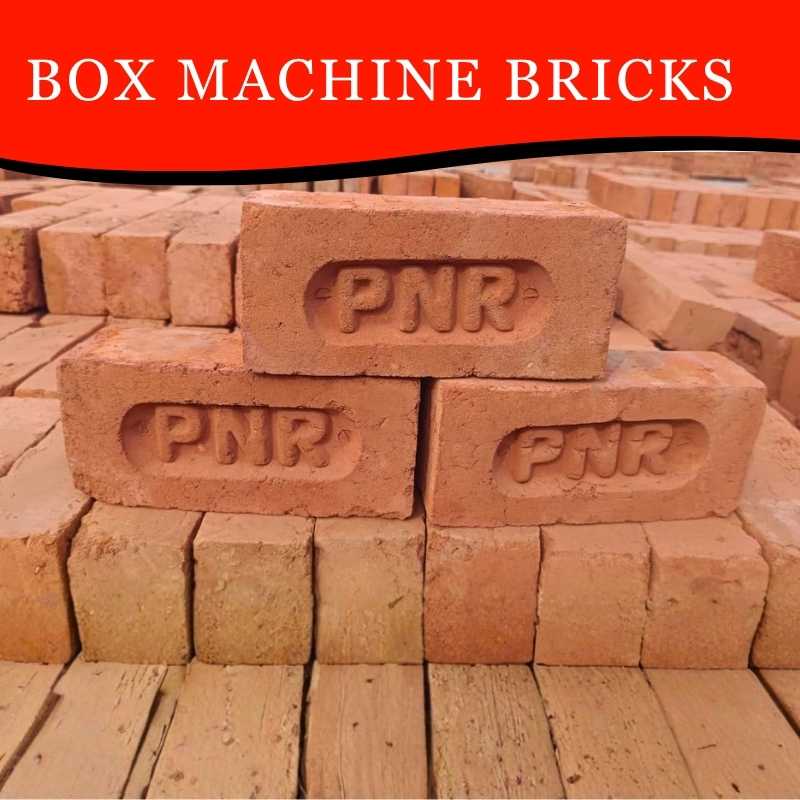
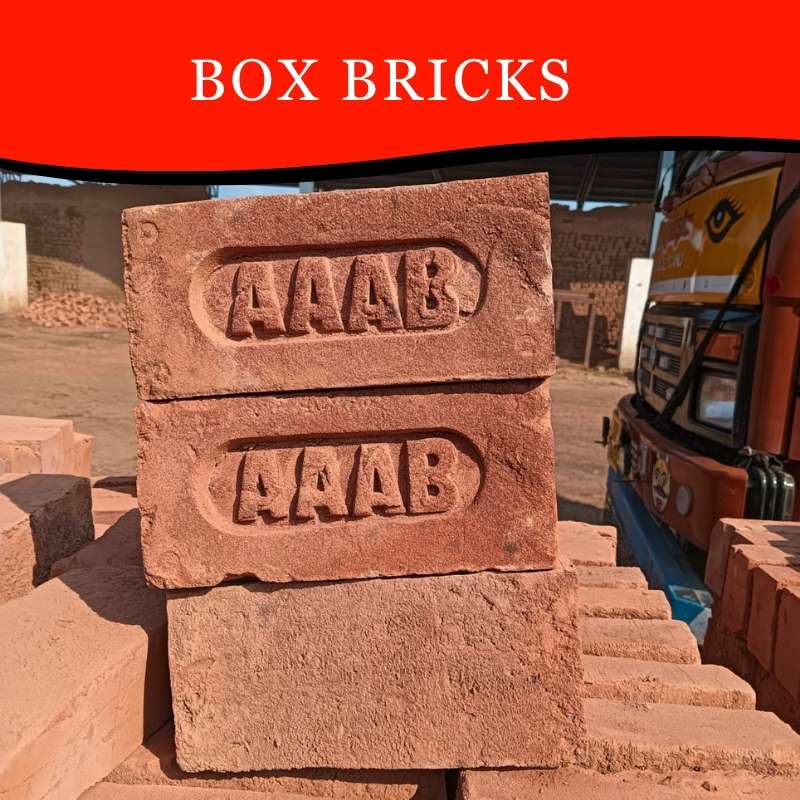
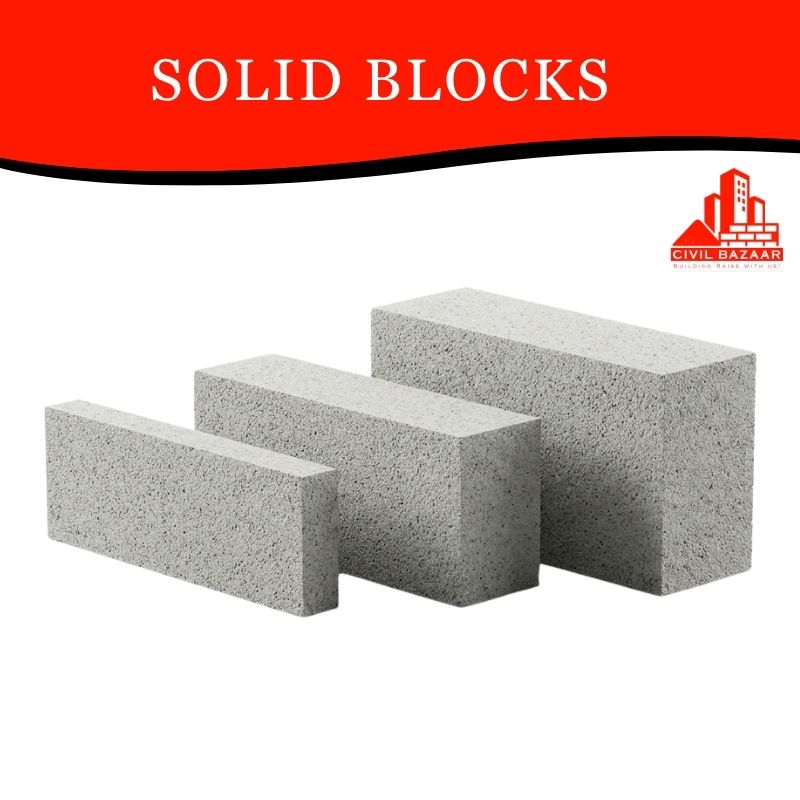
Red bricks come from clay dug locally and fired in kilns — a process that hasn’t changed much in generations. Fly ash bricks start from a different raw material entirely: fly ash, the fine residue collected from thermal power plant chimneys, blended with sand, cement, and water and then cured. AAC blocks take the extra step that gives them their name — cement, lime, fly ash, gypsum, and a small dose of aluminium powder go into a mix that’s aerated, poured, cut to size, and steam-cured under pressure in an autoclave.
That aeration step is the reason AAC behaves so differently on-site from the other two.
Which Material Has the Highest Compressive Strength?
Fly ash bricks come out on top for raw compressive strength, red bricks sit in the middle, and AAC blocks trail on this one metric — though that doesn’t make AAC the weaker choice overall.
Under IS 12894:2002, a fly ash brick classified as Grade I has to clear a minimum of 7.5 N/mm², a bar that comfortably beats AAC’s Grade A ceiling of 3.0 N/mm² under IS 2185. Standard red clay bricks land somewhere in between — commonly 3.5 to 7 MPa — though quality swings widely from kiln to kiln (BigBloc Construction, 2026).
This is the number a mason reaches for when he insists bricks are “stronger” — and for a genuinely load-bearing wall carrying a structure’s full weight, he’s not wrong. But that’s the wrong comparison for most new builds. Red bricks suit load-bearing masonry directly; AAC blocks are built for framed RCC structures, which now make up most modern Indian construction (Bluewing Construction, 2026). In an RCC frame, the columns and beams do the structural work — the walls are just infill, so per-unit strength matters far less than weight, insulation, and how fast the wall goes up.
Citation capsule: Fly ash bricks (7.5–10 N/mm² under IS 12894:2002) beat red bricks (3.5–7 N/mm² under IS 1077) on raw compressive strength, while AAC blocks (up to 3.0 N/mm² under IS 2185) are built for non-load-bearing infill in RCC-framed buildings, where weight and insulation outweigh unit strength.
Why Does Weight Matter So Much in Construction?
A lighter wall means a lighter building, and that turns directly into savings on steel, concrete, and foundation size — the main reason AAC has taken over so much of urban Indian construction.
The gap is large: AAC blocks run 550–650 kg/m³ dry density against 1,600–1,920 kg/m³ for red clay bricks (Dlite Blocks, 2026) — AAC weighs in at roughly a third of clay brick for the same wall volume. The tiny air pockets formed during curing are what make it possible to keep AAC strong while cutting its weight by half to two-thirds compared with fired brick.
Why does that matter beyond the obvious? Every extra kilogram in your walls is a kilogram your foundation and columns have to be sized to carry — more dead load up top means more steel and concrete built into the structure below (BigBloc Construction, 2026). That adds up fast on multi-storey buildings. It’s also a genuine structural consideration in a moderate seismic zone like Chennai, where lighter walls reduce the lateral force a building has to resist during ground movement — not just a cost question.
Fewer, larger units also cut down on masonry labour. One AAC block can do the job of several bricks, which means fewer joints, less mortar, and a lighter overall structure (Dlite Blocks, 2026) — part of why AAC walls typically go up faster than an equivalent brick wall.compare it against our brick pricing
Which Material Handles Chennai’s Heat and Humidity Best?
Thermal performance is where the three materials genuinely diverge — though the real picture is more nuanced than most product pages let on.
Fly ash bricks carry a thermal conductivity of roughly 0.90 W/mK, while fired clay bricks range from 0.70 to 1.30 W/mK depending on density (IDEAS Nagpur, 2026) — meaning a dense, well-fired red brick can actually match or beat a fly ash brick on raw conductivity. What genuinely helps fly ash bricks in practice isn’t the material itself so much as its dimensional consistency, which allows thinner, better-sealed mortar joints — fewer gaps for heat to sneak through.
AAC blocks are the clear winner here, and for a structural reason: their cellular, air-pocket composition gives them meaningfully better insulating properties, which translates into lower cooling loads — a real advantage in Chennai, where air-conditioning is a year-round cost rather than a seasonal one.
Water absorption matters just as much in a coastal, monsoon-exposed city. Standard red clay brick specifications allow water absorption up to 20% by weight, which is a legitimate dampness risk given Chennai’s humidity and rainfall. Fly ash bricks made to IS 12894:2002 are held to the same 20% ceiling, though actual quality varies a lot between manufacturers — always ask for a batch test certificate rather than taking a supplier’s word for it.
What’s the Environmental Impact of Each Material?
If sustainability factors into your decision — and increasingly it should, given tightening green-building codes — red bricks carry by far the heaviest environmental cost of the three.
Industry estimates put topsoil consumption from clay-brick kilns at around 18 tonnes, plus 12–14 tonnes of coal burned, for every lakh bricks fired (GetNeevo, 2025). Fly ash bricks and AAC blocks flip that equation, since both use fly ash — a waste byproduct of thermal power generation — as a core raw material rather than freshly dug soil. India’s Fly Ash Utilization Policy actively encourages exactly this substitution, aiming to cut industrial waste while easing pressure on virgin raw materials (Research and Markets, 2026).
This isn’t a marginal shift. India’s AAC blocks market was valued at roughly $3.6 billion in 2024 and is projected to reach about $6.2 billion by 2030 — a 9.1% compound annual growth rate — driven substantially by government policy and green-building certification requirements like LEED, GRIHA, and ECBC (Research and Markets, 2026). If your project might eventually need a green-building certification, or you simply want to build more responsibly, fly ash bricks and AAC blocks are the materials current policy is steering the market toward.
Which One Actually Costs Less to Build With?
Per-unit price and total construction cost are two different numbers, and mixing them up is the most common budgeting mistake in this comparison.
Red bricks usually carry the lowest price per piece, which is why they stay the default wherever a kiln is nearby and transport costs stay low. But that number doesn’t tell the whole story. Their uneven shapes need more plaster to get a finished surface, and their smaller unit size means more joints, more mortar, and more labour hours per square metre of wall — costs that never show up on the brick quote itself.
AAC blocks flip that trade-off: a higher price per block, offset by meaningfully less mortar, less plaster, and less structural steel — savings that often bring the total wall cost below what red brick ends up costing once labour and structural savings are counted in (Bluewing Construction, 2026).
For current per-piece and per-load pricing on all three materials in Chennai, check our regularly updated brick pricing guide — rates shift with fuel and raw-material costs, so we keep that page current rather than quoting fixed numbers here.
So Which One Should You Actually Choose?
There’s no single right answer — the correct material depends on what you’re building, not which one wins on paper.
- Building an RCC-framed house, apartment, or commercial structure? AAC blocks are the standard choice for most new Indian construction in 2026. Lighter walls, better insulation, faster masonry, and lower total structural cost outweigh the lower per-unit compressive strength, since the walls aren’t load-bearing anyway.
- Building something small and budget-constrained that is load-bearing — a boundary wall, an outhouse, a single-storey structure? Red bricks remain a reasonable, familiar, low-upfront-cost choice, especially with a kiln nearby to keep transport costs down.
- Want strong masonry with a smaller footprint than clay, without needing AAC’s weight savings? Fly ash bricks give you the highest raw compressive strength of the three, solid water resistance when properly certified, and a real sustainability edge over red clay — a workable middle ground.
- Chasing a green-building certification, or building somewhere cooling costs run year-round? AAC’s insulation performance and fly-ash content make it the strongest fit for LEED, GRIHA, or ECBC compliance targets.
Whatever you land on, ask your supplier for the IS test certificate for the specific batch you’re buying. Quality varies significantly between manufacturers within every one of these three categories — that’s a bigger swing factor than the material choice itself.
see our full range of building materials
Frequently Asked Questions
Are AAC blocks actually weaker than red bricks?
Per unit, yes — AAC’s Grade A compressive strength tops out at 3.0 N/mm² against 3.5–7 N/mm² for red bricks (IS 2185 vs IS 1077). But AAC is built for non-load-bearing infill walls in RCC-framed buildings, where the structural frame carries the load, so the strength gap matters far less than it sounds for that use case.
Which material is best for Chennai’s humid climate?
AAC blocks generally win on thermal comfort due to their insulating cellular structure, while fly ash bricks made to IS 12894:2002 offer solid water-absorption control (capped at 20%) when properly certified. Red bricks are most prone to dampness in humid coastal conditions if water absorption isn’t verified before purchase.
Do fly ash bricks really outperform red bricks in strength?
Yes — IS 12894:2002 Class I fly ash bricks require a minimum 7.5 N/mm² compressive strength, against 3.5–7 N/mm² typical for red clay bricks under IS 1077. Fly ash bricks are also more uniform in shape, which cuts down on plaster wastage on site.
Is it cheaper to build with red bricks or AAC blocks?
Red bricks cost less per piece, but AAC blocks typically use less mortar, less plaster, and less structural steel thanks to their light weight — narrowing or even reversing the total cost gap once labour and structural savings are counted. The comparison that matters is total wall cost per square metre, not price per unit.
What Indian Standards govern these three materials?
Red clay bricks fall under IS 1077:1992, fly ash bricks under IS 12894:2002, and AAC blocks under IS 2185 (Part 4):2008. Always ask your supplier for a current test certificate referencing the relevant standard before placing a bulk order.
Read next: our AAC blocks buyer’s guide for Chennai homes