

Address
Sriperumbudur Main Road, Manimangalam, CHENNAI, Tamil Nadu 601301
Sriperumbudur Main Road, Manimangalam, CHENNAI, Tamil Nadu 601301
Chennai’s construction industry is changing fast. Walk through any new residential project in OMR, Tambaram, or Ambattur, and chances are the masons aren’t laying traditional red bricks anymore. They’re stacking large, pale grey blocks that go up three times faster, weigh a fraction of the old material, and keep interiors dramatically cooler.
Those are AAC blocks — and if you’re planning a house in Chennai right now, you need to understand them before you spend a single rupee on walling material.
This guide covers everything: what AAC blocks are, how they’re made, the real cost and benefit numbers, size selection for different walls, and how to get them delivered to your site in Chennai.
Key Takeaways
- India’s AAC block market grew from ₹50 crores in 2008 to ₹4,000 crores in 2025 — a 58× rise driven by demand for faster, greener construction (Moglix Business, 2025).
- In residential construction, AAC blocks reduce construction time by up to 20% and cut mortar and labour costs by as much as 30% (Grand View Research, 2025).
- Buildings made with AAC blocks for Residential stay 3–5°C cooler than red brick equivalents — critical for Chennai’s 38–40°C summers.
- India’s AAC block market is projected to reach USD 9.1 billion by 2034, growing at 9.5% CAGR (IMARC Group, 2025).
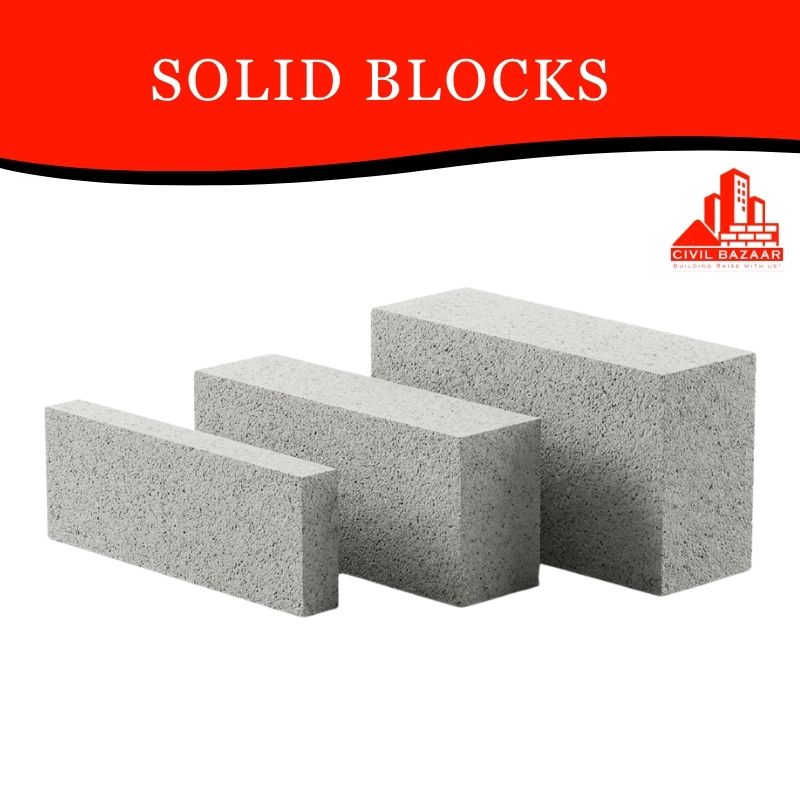
AAC stands for Autoclaved Aerated Concrete. The name tells you the whole story. These blocks start as a slurry of cement, fly ash, lime, gypsum, and water. Manufacturers then add a small amount of aluminium powder. That powder reacts with the lime to produce millions of tiny hydrogen bubbles — and those bubbles are the secret.
The mixture rises like bread dough. Once it sets, the result is a cellular concrete matrix with roughly 60–80% air content by volume. The blocks then go into an autoclave — a pressurised steam chamber — where high temperature and pressure cure them to final strength.
What comes out is a block that’s:
The air pockets that make AAC blocks light are the same ones that make them thermally and acoustically superior. You’re essentially building your walls with tiny trapped air columns — and air is one of the best insulators there is.

The numbers tell a remarkable story. India’s AAC block market grew from just ₹50 crores in 2008 to a projected ₹4,000 crores in 2025 — recording a decade growth rate of 58%. That kind of trajectory doesn’t happen by accident.
The India autoclaved aerated concrete blocks market was valued at USD 4.0 billion in 2025, and is projected to reach USD 9.1 billion by 2034, exhibiting a CAGR of 9.50%.
Three forces are driving this growth in India:
Government housing push. Under Pradhan Mantri Awas Yojana, AAC blocks are actively promoted as eco-friendly, affordable walling material. The Indian government is focusing on limiting the carbon footprint, and the construction sector is adopting measures that promote fast, operationally efficient building with reduced environmental impact.
Urban residential demand. In India, the residential sector accounted for an estimated 65% of total domestic AAC block consumption in 2025, driven by the formalization of construction in urban peripheries and government-backed housing programs.
Green building mandates. Projects targeting IGBC or GRIHA certification increasingly specify AAC blocks for Residential because of their fly ash content and energy performance credentials.
This is the question every builder asks when first switching. Here’s a data-driven answer.
Compared to traditional bricks, AAC blocks weigh one-third as much, yet possess the same compressive strength of 3–5 N/mm². That lightness reduces the dead load on foundations and structural elements, creating real savings on steel and concrete.
On construction speed: estimated construction completion time is reduced by around 20% as a result of the larger dimensions, precise manufacture, and ease of AAC block cutting and shaping — with reduced mortar utilisation and lower labour intensity further accelerating the schedule.
What does that mean on a real Chennai project? For a typical 2,000 sq ft house, switching to AAC blocks can save 15–20 labour days compared to red brick construction. At Chennai’s current mason day rates of ₹700–900, that’s a direct saving of ₹10,500–₹18,000 in labour alone.
On thermal performance, the cellular structure of AAC captures air and provides better energy savings than usual HVAC expenses. In Chennai’s climate, where summers push 38–40°C, buildings constructed with AAC blocks stay 3–5°C cooler than equivalent red brick buildings. That’s a meaningful reduction in air conditioning load — and lower electricity bills for every resident.
Because AAC blocks use 30% less energy to manufacture than red clay bricks, their use results in a reduction in carbon emissions — which also matters for any project targeting green building ratings.
The honest trade-off: AAC blocks for Residential cost more per piece than a red brick. A single 4-inch (100mm) AAC block runs ₹44–60 in Chennai, while a red brick costs ₹9–13. But one AAC block replaces approximately 8 conventional bricks. Once you account for reduced mortar, thinner plaster coats, shorter labour time, and lighter structural requirements, most experienced Chennai contractors confirm that AAC block projects work out 10–15% cheaper on a total project cost basis.
Choosing the wrong thickness is a common mistake. Too thin and you sacrifice thermal performance or structural capacity. Too thick and you’re wasting money and floor space.
Here’s how experienced builders in Chennai approach size selection:
100 mm (4-inch) blocks work for internal partition walls — bedrooms dividing from living rooms, bathroom walls, utility areas. They provide adequate sound insulation between rooms (around 40 dB reduction) without eating into your floor plate.
150 mm (6-inch) blocks are the most versatile for residential use. They work well for external walls in single-storey and ground-floor construction, offering a good balance between thermal performance and cost. The 6-inch block typically ranges from ₹65–85 per piece in 2025.
200 mm (8-inch) blocks are the standard for external walls of two- and three-storey residential buildings and are suitable as load-bearing walls in low-to-medium rise construction. An 8-inch AAC block runs ₹85–110 per piece and is ideal for external walls where sound and thermal insulation are critical.
230 mm blocks are used in heavy-duty commercial and industrial applications — generally not needed for standard residential work.
A practical tip: always confirm your block selection with your structural engineer. Chennai falls under Seismic Zone III, and block thickness affects your wall’s behaviour during an earthquake. For an RCC-framed building (which most modern Chennai homes are), AAC blocks work as infill — so your structural engineer may be comfortable with 150 mm external walls even on G+2 construction.
Why has the shift accelerated so dramatically in Chennai specifically? A few reasons go beyond the general national trend.
1. Faster construction, lower labour cost. One AAC block replaces approximately 8 conventional red bricks. Your masons lay walls faster, finish the shell earlier, and you pay fewer days of labour. For a typical Chennai 2,000 sq ft house, this alone saves 15–20 working days.
2. Thermal comfort for Chennai’s brutal summers. The cellular structure of AAC works as an insulator — capturing air and being more valuable in providing energy savings than the usual expenses of powering HVAC systems. With Chennai summers regularly crossing 40°C, a 3–5°C reduction in indoor temperature without extra air conditioning is a genuine quality-of-life improvement.
3. Lower structural dead load. AAC blocks weigh 550–650 kg/m³ compared to 1,800–2,000 kg/m³ for red bricks. That reduced dead load lets structural engineers design lighter beams, columns, and foundations — sometimes saving ₹50–100 per sq ft on structural steel and concrete.
4. Less plaster, better finish. AAC blocks have a flat, dimensionally precise surface. They need only 6 mm of plaster compared to 12–18 mm for red brick walls. You spend less on material and labour — and get a smoother, more consistent finish.
5. Seismic safety matters in Chennai. AAC blocks also exhibit excellent durability and resistance to environmental factors such as moisture, termites, and fire. Their lightweight nature reduces inertial forces on the structure during seismic events — a real safety benefit in Chennai’s Zone III context.
6. Green building credentials. AAC blocks are made primarily from fly ash — an industrial waste product from thermal power plants. Using fly ash and other industrial by-products lowers waste and conserves natural resources. Projects targeting IGBC or GRIHA green certification in Chennai benefit significantly.
7. Sound control for urban Chennai. The ability of AAC blocks to dampen sound (up to 42 dB) creates quiet and relaxing surroundings — highly valuable in the noisy cities of India. For apartments near OMR’s traffic or North Chennai’s industrial zones, this matters to residents and sells units faster.

Getting the blocks right matters as much as choosing them. Here’s what proper AAC block masonry looks like — so you can supervise your site with confidence.
Surface preparation. Start with a clean, level bed of cement mortar or block jointing mortar. Masons must wet all the blocks with water before starting the application process — this is a crucial step that many masons miss unless supervised.
Mortar thickness. Keep the thickness of mortar limited to 10–12 mm with regular cement mortar, or 3–4 mm with ready-made jointing mortar. Thicker joints waste material and reduce wall strength.
Bond beam. It is recommended to apply a coping beam (bond beam) with 2 nos. of 8 mm diameter reinforcement after every 1.2 m height. This ties the wall together and is non-negotiable in Seismic Zone III.
Cutting. Use tools like a hacksaw, rotary cutter, or hand wood saw. Ensure the block is completely dry before cutting — a wet block resists easy cutting.
Curing. Curing is necessary only for cement mortar joints, not for ready-made jointing mortar. Don’t over-water the wall; AAC blocks have lower water absorption than red bricks and don’t need the same curing regime.
Plastering. Apply a 6 mm coat of polymer-modified plaster or standard cement plaster. The smooth, flat surface of AAC blocks means plaster bonds well without the need for chicken mesh on flat stretches — though chicken mesh is still recommended at junctions and around window openings.
[INTERNAL-LINK: building materials guide → link to civilbazaarchennai.com/blog or shop page for construction materials]
Let’s look at real numbers rather than vague ranges.
Block cost per piece (Civil Bazzar, Chennai, 2025):
Quantity required: A standard 2,000 sq ft house in Chennai (G+1, typical plan) needs roughly 3,500–4,500 blocks of mixed sizes (external walls in 200 mm, internal partitions in 100 mm).
Total block material cost estimate: ₹2.5–4 lakh depending on size mix and design.
What you save with AAC versus red brick (for a 2,000 sq ft house):
The net picture: the overall cost of building a house with AAC blocks in chennai ranges between INR 1,500 and 2,500 per square foot for residential construction, including materials, labour, and finishing — comparable to or lower than a well-built red brick house when you count everything
Even good builders make these errors when they first switch from red brick. Watch out for them on your project.
Skipping block wetting. AAC blocks are porous. If you lay them dry, they suck moisture from the mortar instantly — weakening the bond. Always wet the blocks before laying.
Using the wrong mortar thickness. Some masons apply 20–25 mm mortar joints out of habit from red brick work. With AAC blocks, this wastes material and actually reduces wall performance. Keep joints to 10–12 mm max.
Not using bond beams. In a Chennai seismic zone, bond beams every 1.2 m of height are not optional. Omitting them leaves the wall vulnerable to cracking under lateral loads.
Cutting blocks when wet. AAC blocks cut easily when dry but resist cutting when wet. Always wait for blocks to dry completely before making cuts.
Applying thick plaster. Some contractors apply 15–18 mm of plaster on AAC walls because that’s what they know. It’s unnecessary, costs more, and adds dead load. Six to eight millimetres is the correct target.
[INTERNAL-LINK: building materials → link to civilbazaarchennai.com/aac-blocks-in-chennai/ for pricing and ordering information]
Finding the right supplier matters as much as choosing the right block. Here’s what to look for — and what Civil Bazzar offers.
IS compliance. Every block should meet IS 2185 Part 3. Ask your supplier for compliance documentation. Civil Bazzar supplies only IS-compliant blocks with verified dry density (550–650 kg/m³), compressive strength (3–5 N/mm²), and water absorption (under 10%).
Delivery reliability. Construction sites run on schedules. A supplier who delivers late costs you labour days even if the blocks are free. Civil Bazzar delivers directly to your site across all major Chennai zones — from OMR to Ambattur, Tambaram to Anna Nagar.
Competitive pricing with bulk discounts. Per-piece pricing looks simple, but project economics depend on your total order. Civil Bazzar accommodates both small orders (500 blocks for an extension) and large developments (50,000+ blocks for an apartment complex), with pricing that reflects your volume.
Accessible advice. Not sure which block size to specify? Civil Bazzar’s team can advise based on your structural drawing and project type.
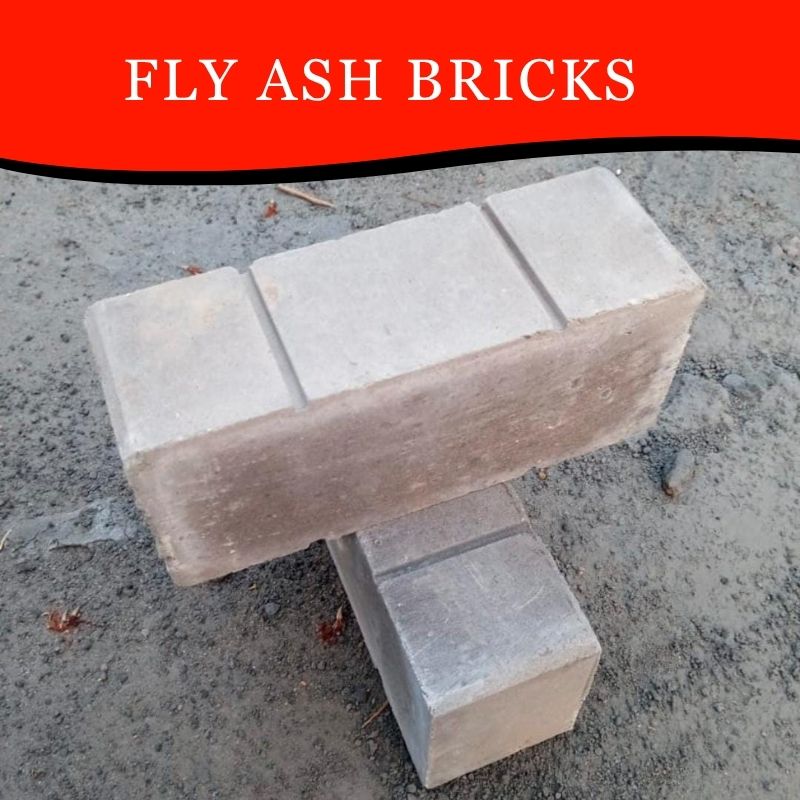
Both use fly ash as a raw material. The difference is in the manufacturing process. AAC blocks are aerated (contain air pockets) and autoclave-cured under high pressure and temperature, giving them much lower density and far better thermal insulation. Fly ash bricks are denser, heavier, and cheaper per piece, but lack the thermal performance and weight advantage of AAC blocks. For modern residential construction in Chennai, AAC blocks are lighter, faster to build with, and provide superior thermal and sound insulation compared to red bricks — and usually cost less overall when factoring in labour, mortar, and plaster savings.
Yes. 200 mm (8-inch) AAC blocks are suitable for load-bearing walls in low-to-medium rise residential construction. For a typical G+1 or G+2 house in Chennai built on an RCC frame, AAC blocks are used as infill walls — which places no structural demand on the block itself. Your structural engineer specifies the RCC frame to carry the loads, and the AAC blocks simply enclose the space. Compressive strength of 3–5 N/mm² meets the requirements for this application under IS 2185 Part 3.
AAC blocks are highly durable with a lifespan of 70–100 years if installed correctly. They don’t warp, crack easily, or get damaged by termites. In Chennai’s coastal and humid climate, their low water absorption (under 10%) also means they resist the dampness and salt air exposure that deteriorate other materials faster.
Per block, AAC is more expensive than a red brick. But AAC blocks are significantly cheaper in the overall construction cost. Their larger size means fewer blocks are needed, reducing labour, mortar, and plaster costs. The lightweight nature also reduces the dead load on the structure, leading to savings on steel and concrete. Most experienced Chennai contractors find AAC block projects work out 10–15% cheaper on a full-project cost basis.
Civil Bazzar accommodates both small and large orders — from 500 blocks for a small home extension to 50,000+ for a large residential development. Call or WhatsApp to discuss quantity, current pricing, and delivery scheduling for your project.
AAC blocks aren’t a trend — they’re the walling material that experienced Chennai builders, contractors, and structural engineers are choosing for their own projects and recommending to their clients. Faster builds, lower total costs, superior thermal comfort, and proven seismic safety. India’s growing demand for sustainable, lightweight construction materials has put AAC blocks at the centre of the country’s residential construction future.
Civil Bazzar makes it straightforward. We supply premium IS-compliant AAC blocks with direct site delivery across Chennai and the surrounding districts — Kanchipuram, Chengalpattu, Tiruvallur, and beyond.
Call or WhatsApp us today to get your free quote:
📞 +91 91599 91590 📧 civilbazaarchennai@gmail.com 📍 Padappai, Chennai — 601 301
Get a Free Quote on AAC Blocks → Browse All AAC Blocks & Sizes →
Civil Bazzar is Chennai’s trusted building materials supplier, delivering AAC blocks, M-sand, blue metal, bricks, and cement to residential and commercial projects across Tamil Nadu. All blocks supplied comply with IS 2185 Part 3 standards